
Trig partnered with Couplet Care to design the over-bed hospital bassinet, enabling mothers to independently access their infants after childbirth. The resulting product has won four international design awards and is now being purchased and integrated into U.S. hospitals.

Traditional hospital bassinets have rigid side walls that are too high which prevent mothers from safely reaching their newborns. This creates dependency on nurses for basic maternal-newborn interactions—feeding, comforting, bonding—at a time when mothers need autonomy and to be able to recover.
The University of North Carolina at Chapel Hill and UNC spin-out Couplet Care, Inc engaged Trig to co-design a bassinet that centered on empathy: keeping mother and infant together, reducing nurse burden, and meeting strict hospital safety standards.
The design journey began with the insight of medical anthropologist Kristin Tully, Ph.D., who had spent years studying the lived experience of mothers and infants in postpartum care. Her research revealed a simple but powerful truth: new mothers need an accommodating-built environment, just as much as they need other components of quality care.
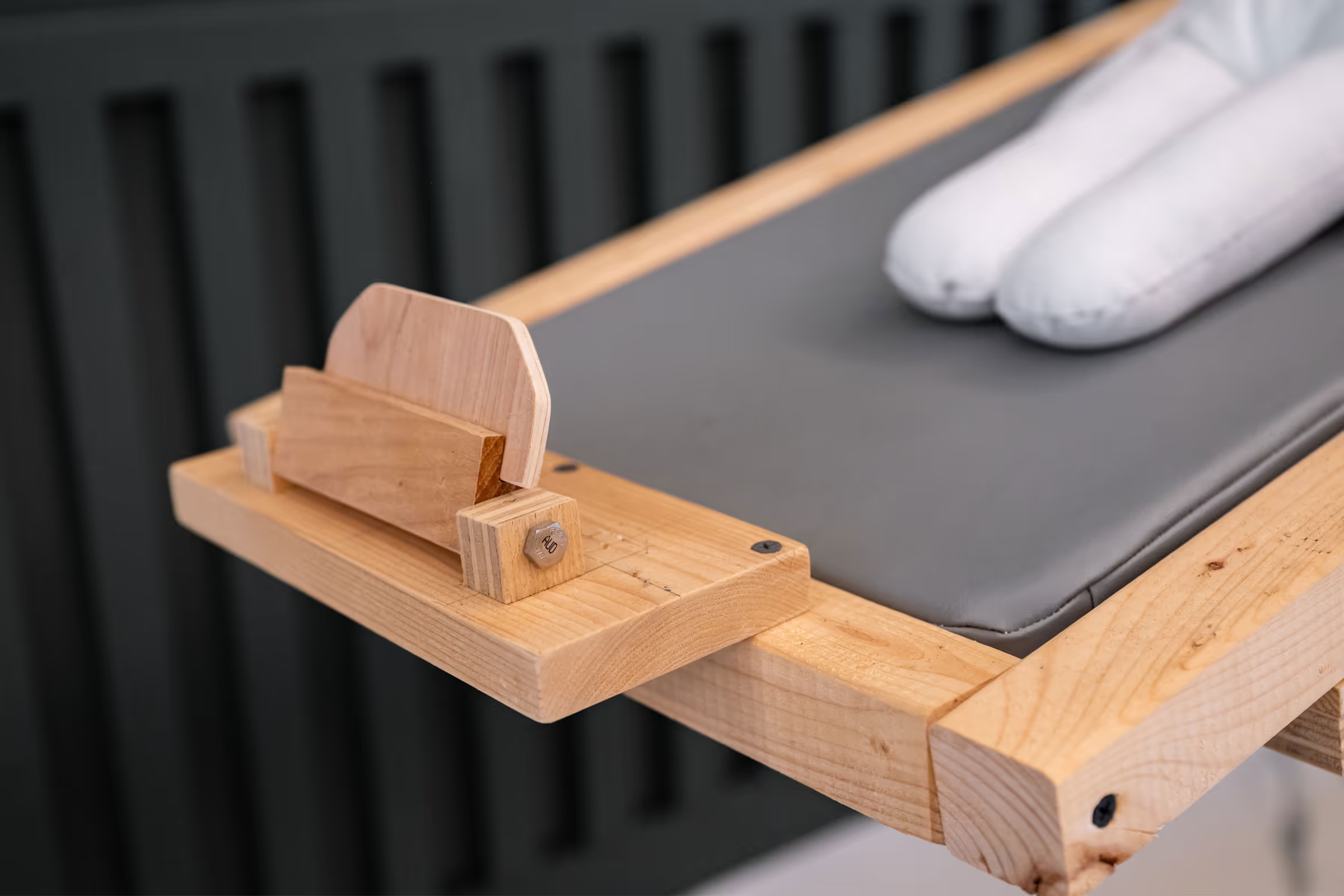
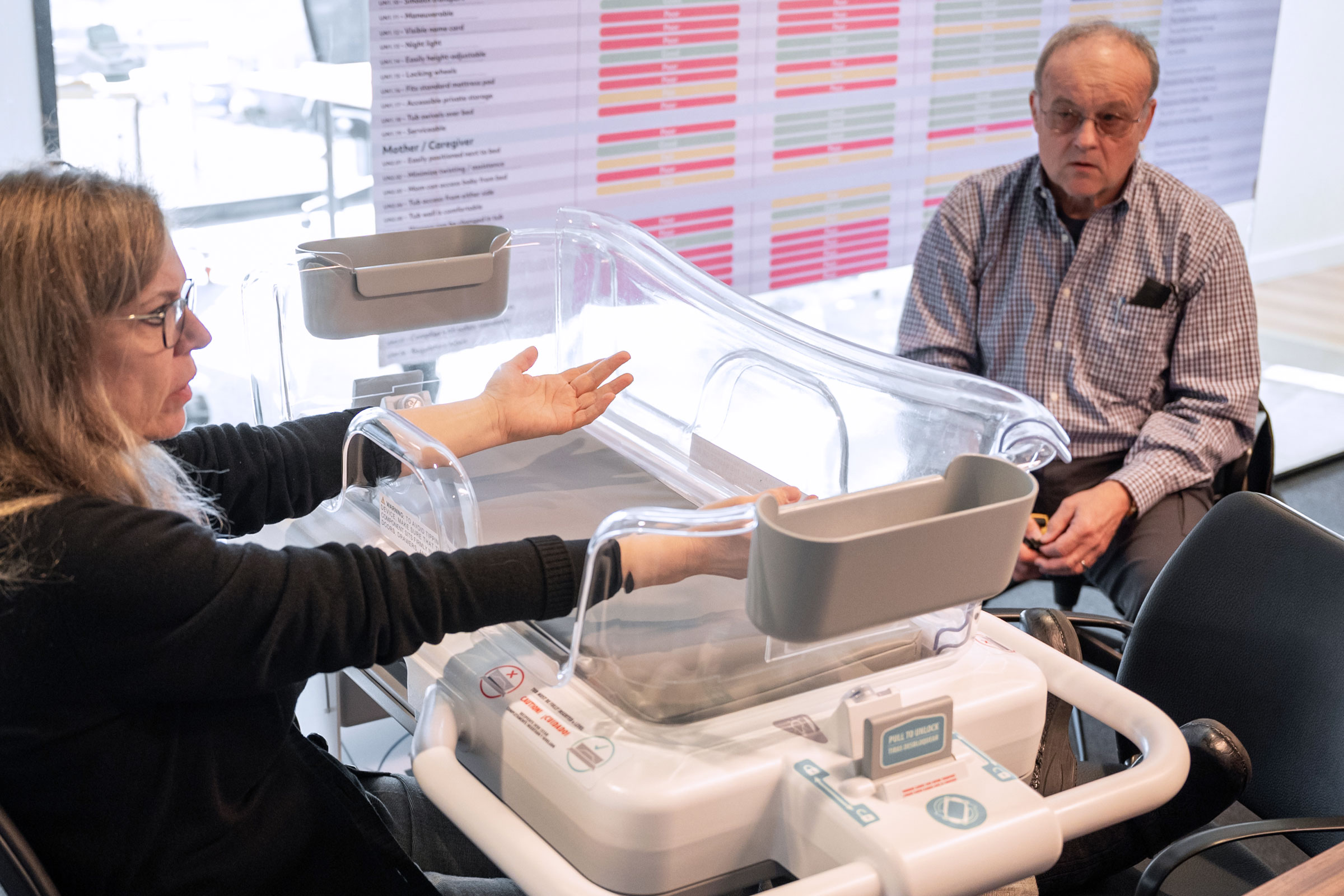
To address the gap for safe connection within postnatal unit rooms, UNC researchers and Trig partnered with master’s design students at NC State University to immerse ourselves in the hospital environment. We observed postpartum routines, interviewed nurses, and mapped patient journeys. These early investigations became the foundation for concept sketches and ergonomic mock-ups that tested reach, comfort, and visibility in real-world scenarios.
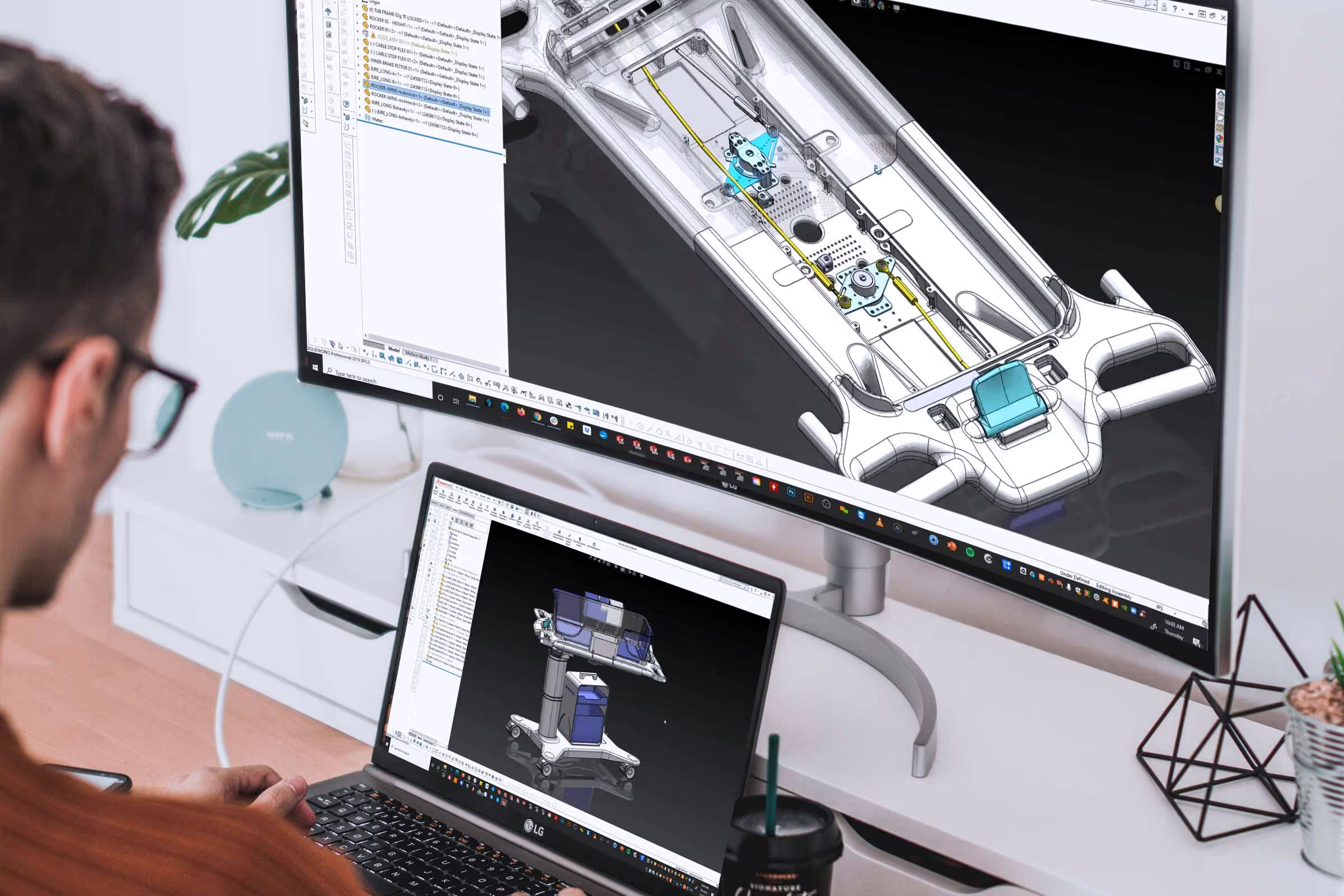
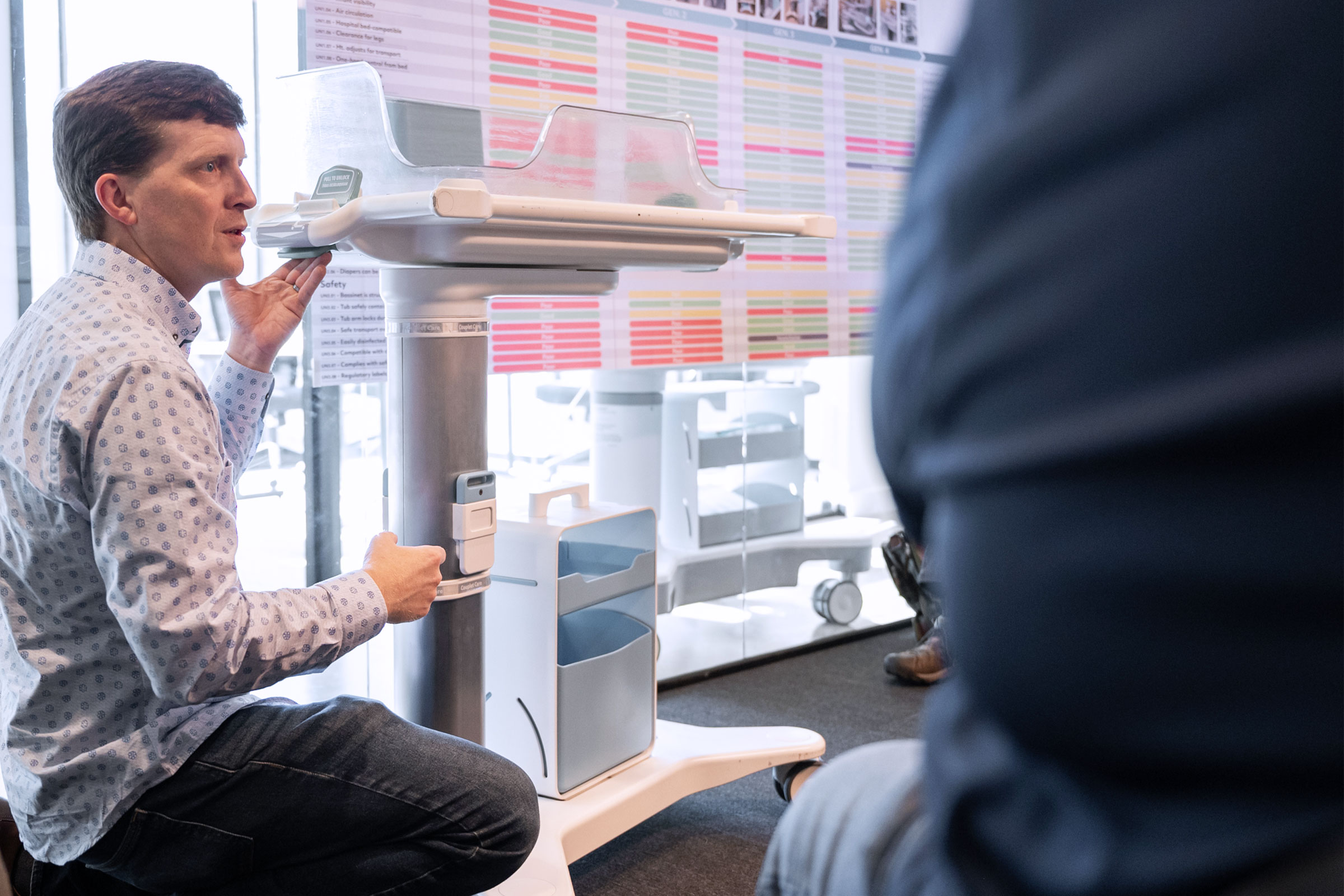
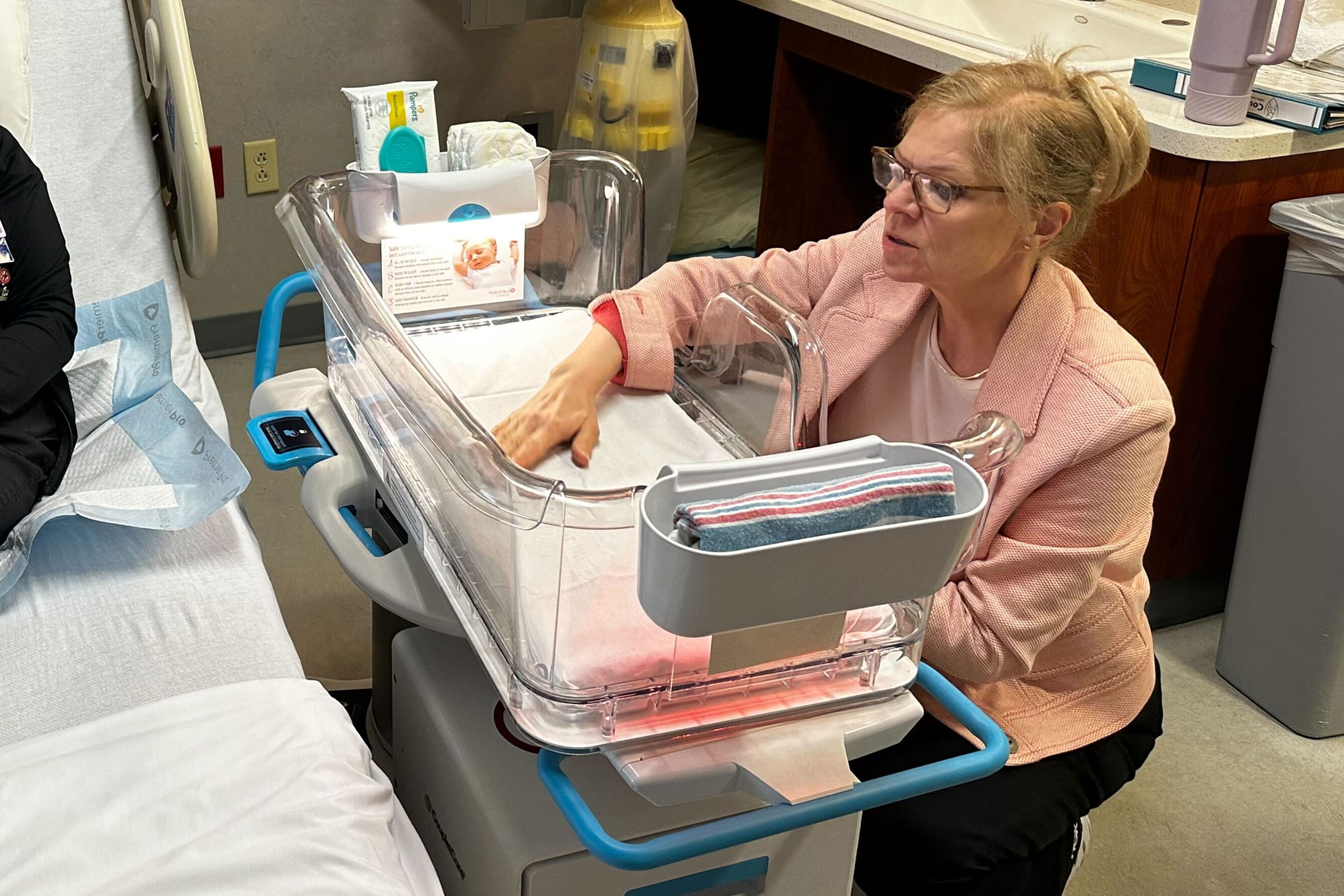
Through three full prototyping cycles, the bassinet evolved from idea to refined product. Each iteration advanced key elements of the design, including an adjustable height that aligns with today’s low hospital beds, a rotating over-bed configuration that allows mothers to reach their infants safely, and a transparent tub that protects while keeping the newborn visible.
At every stage, Couplet Care was a hands-on partner, helping to integrate clinical feedback and ensure manufacturability while centering user needs. The result was a design that is both empathetic and practical, demonstrating how industrial design can transform interactions as intimate and critical as the first days of life together.


With support from Trig’s design expertise and funding from the National Institute of Health and other organizations, the Couplet Care Bassinet is now available for sale. We are excited to offer the device to meaningfully advance postpartum care

The Couplet Care Bassinet has been recognized with four international design awards, including honors from Red Dot, Core77, IDSA, and Good Design. These accolades validated the innovation on a global stage and affirmed the role of industrial design in transforming maternal care.
Beyond the recognition, the true measure of success is in the hospital environment. The bassinet is giving mothers greater independence after childbirth, easing the workload of nurses while improving safety, and advancing a new Couplet System of Care that reimagines the postpartum experience. What began as an insight in patient research has become both an award-winning design and a trusted part of clinical practice.
Trig partnered with Couplet Care to design the over-bed hospital bassinet, enabling mothers to independently access their infants after childbirth. The resulting product has won four international design awards and is now being purchased and integrated into U.S. hospitals.
Traditional hospital bassinets have rigid side walls that are too high which prevent mothers from safely reaching their newborns. This creates dependency on nurses for basic maternal-newborn interactions—feeding, comforting, bonding—at a time when mothers need autonomy and to be able to recover.
The University of North Carolina at Chapel Hill and UNC spin-out Couplet Care, Inc engaged Trig to co-design a bassinet that centered on empathy: keeping mother and infant together, reducing nurse burden, and meeting strict hospital safety standards.
The design journey began with the insight of medical anthropologist Kristin Tully, Ph.D., who had spent years studying the lived experience of mothers and infants in postpartum care. Her research revealed a simple but powerful truth: new mothers need an accommodating-built environment, just as much as they need other components of quality care.
To address the gap for safe connection within postnatal unit rooms, UNC researchers and Trig partnered with master’s design students at NC State University to immerse ourselves in the hospital environment. We observed postpartum routines, interviewed nurses, and mapped patient journeys. These early investigations became the foundation for concept sketches and ergonomic mock-ups that tested reach, comfort, and visibility in real-world scenarios.
Through three full prototyping cycles, the bassinet evolved from idea to refined product. Each iteration advanced key elements of the design, including an adjustable height that aligns with today’s low hospital beds, a rotating over-bed configuration that allows mothers to reach their infants safely, and a transparent tub that protects while keeping the newborn visible.
At every stage, Couplet Care was a hands-on partner, helping to integrate clinical feedback and ensure manufacturability while centering user needs. The result was a design that is both empathetic and practical, demonstrating how industrial design can transform interactions as intimate and critical as the first days of life together.




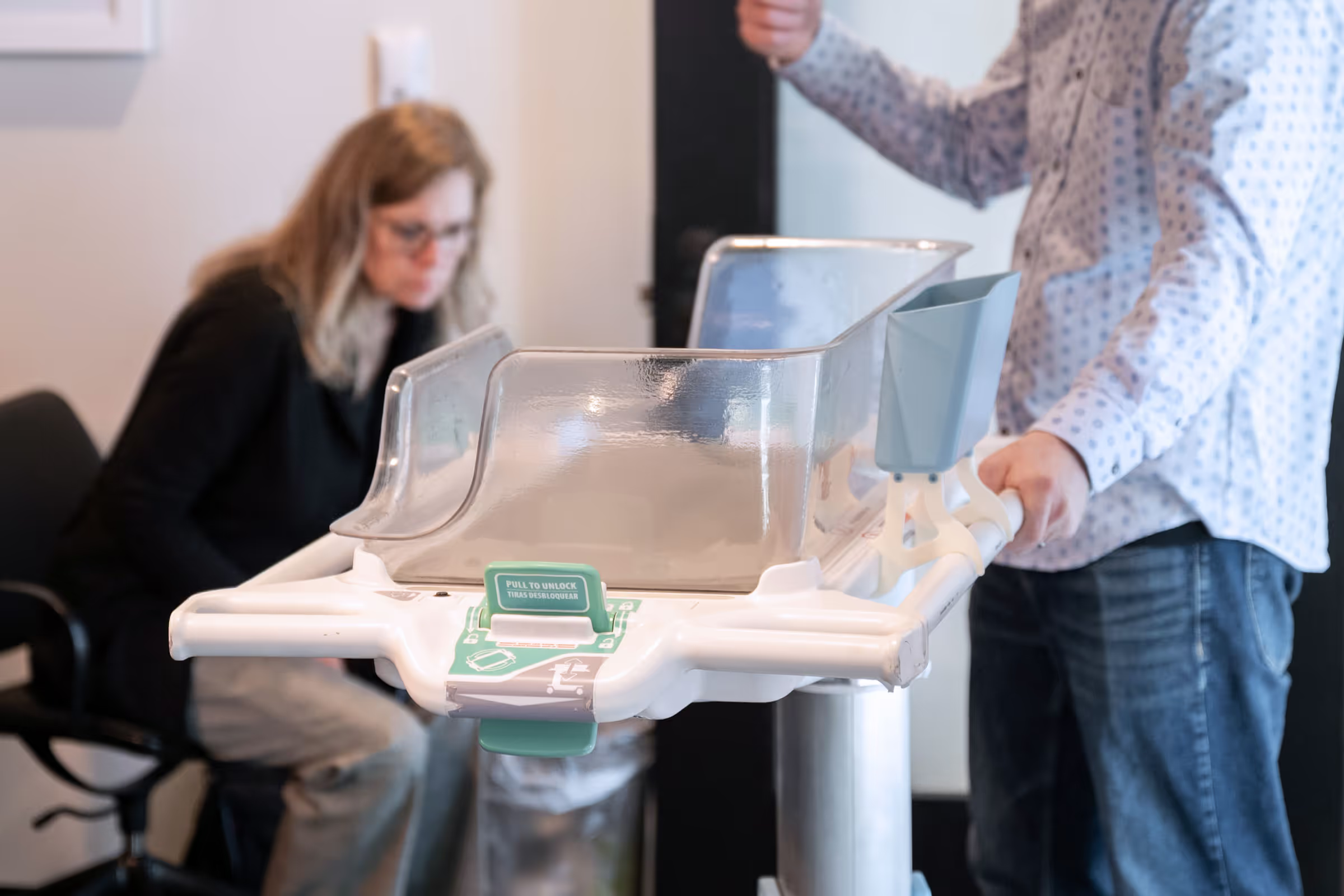


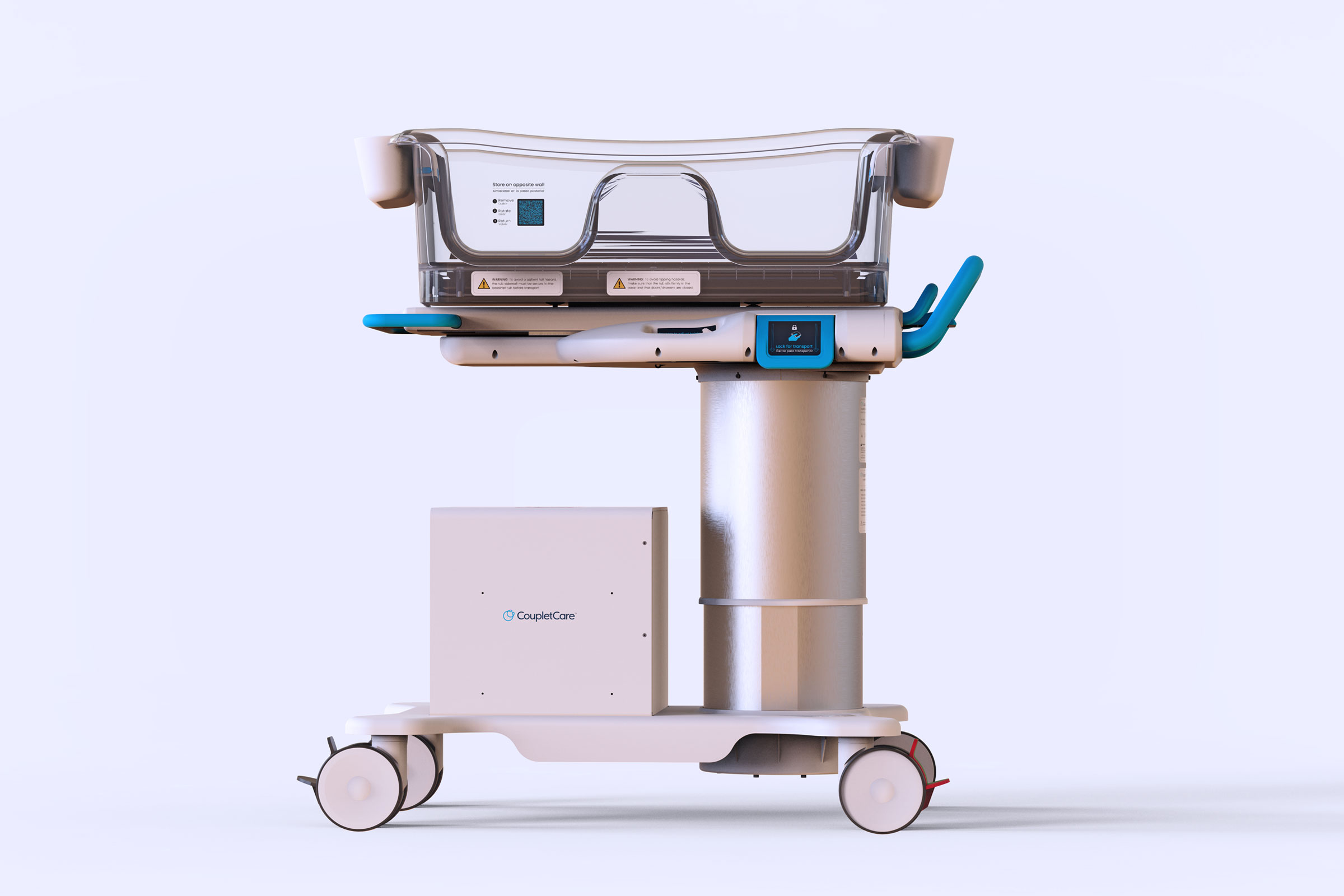
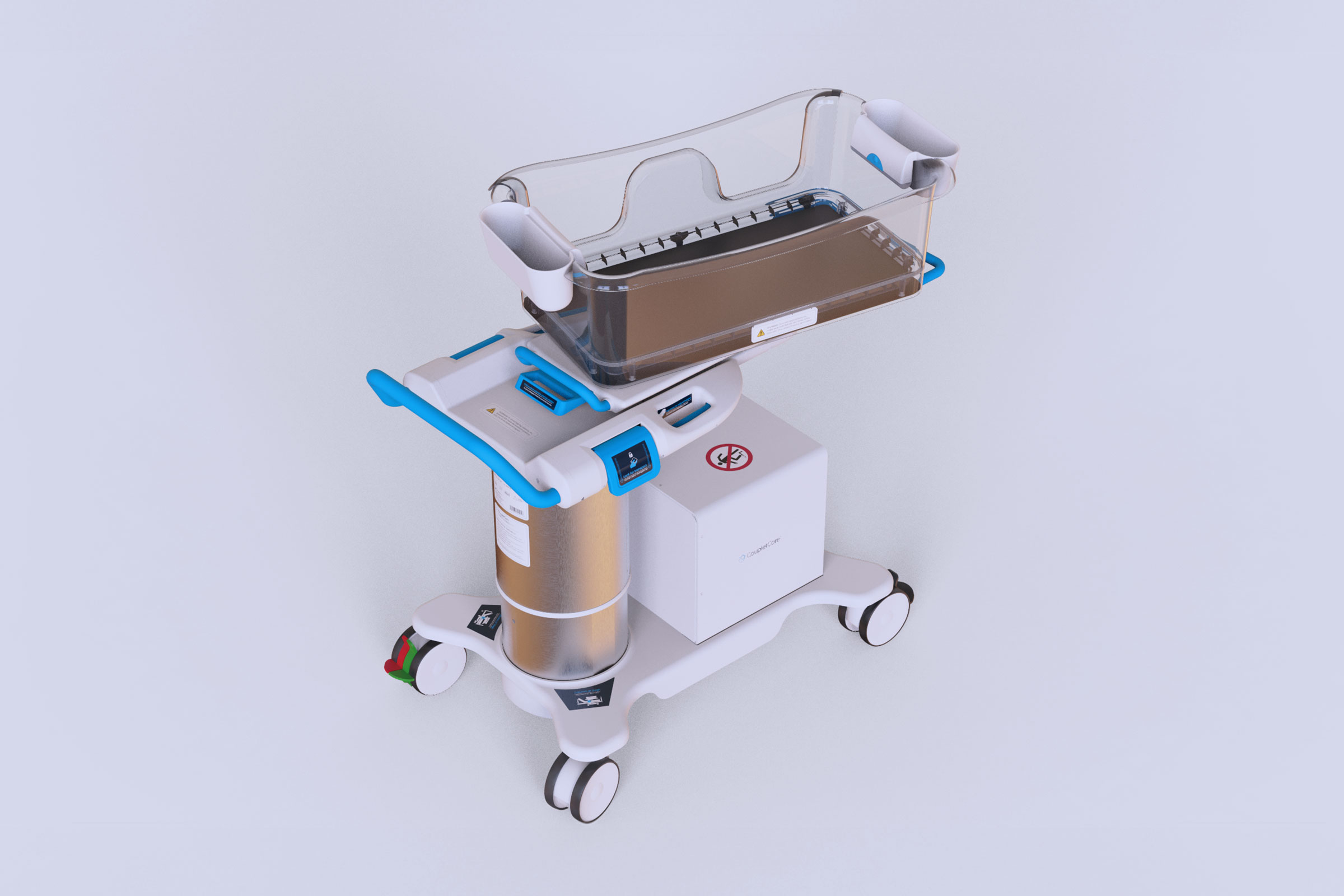
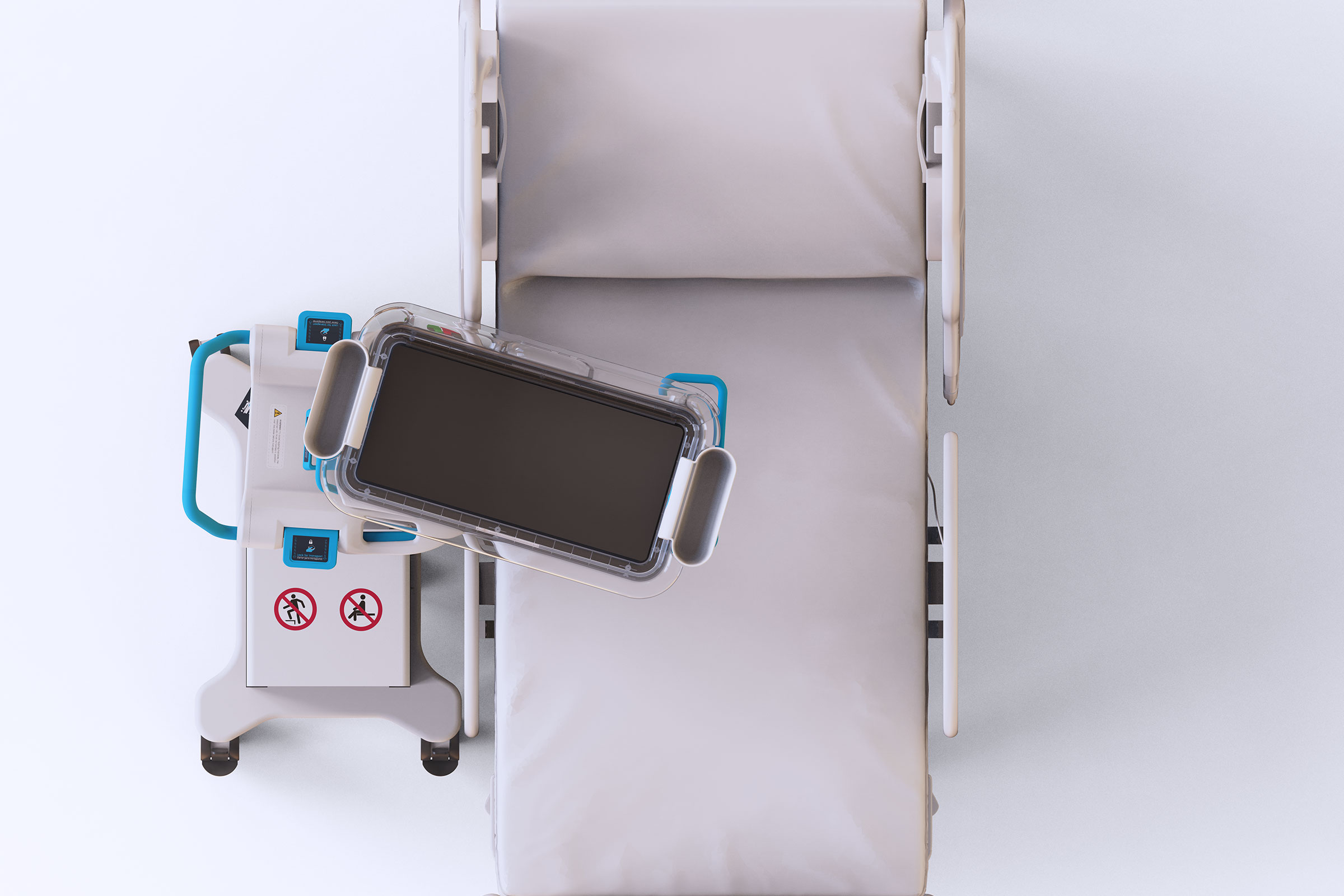
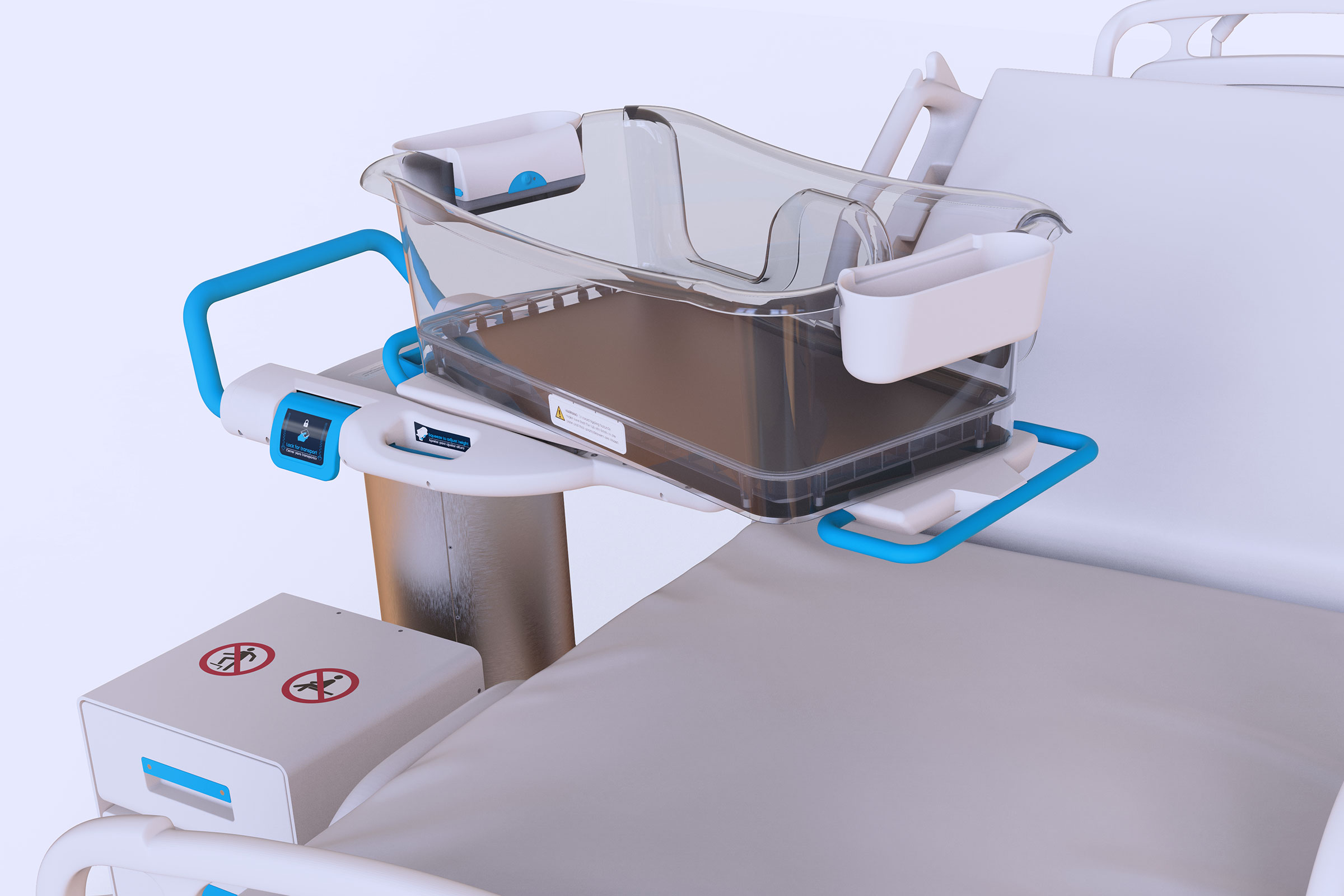
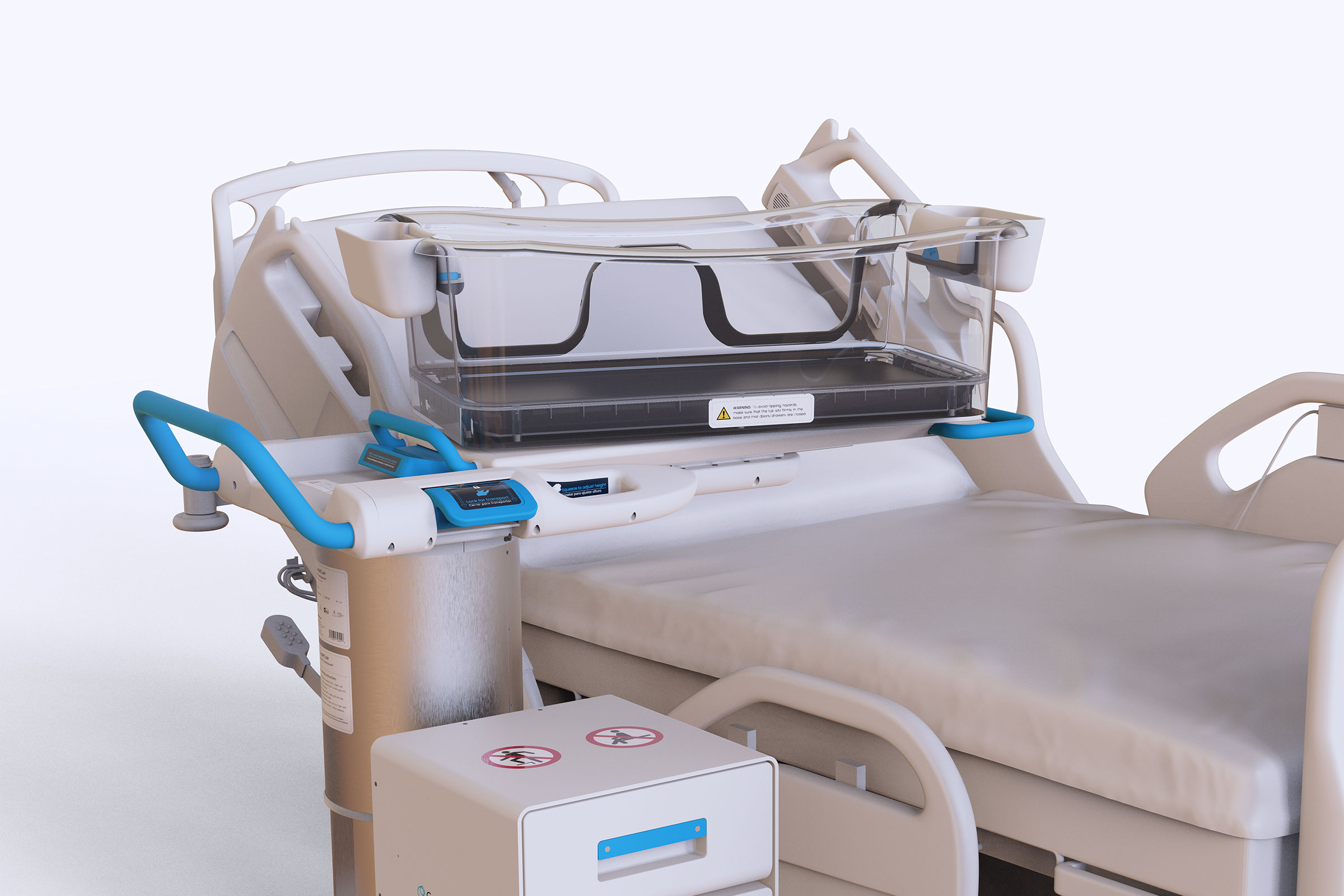
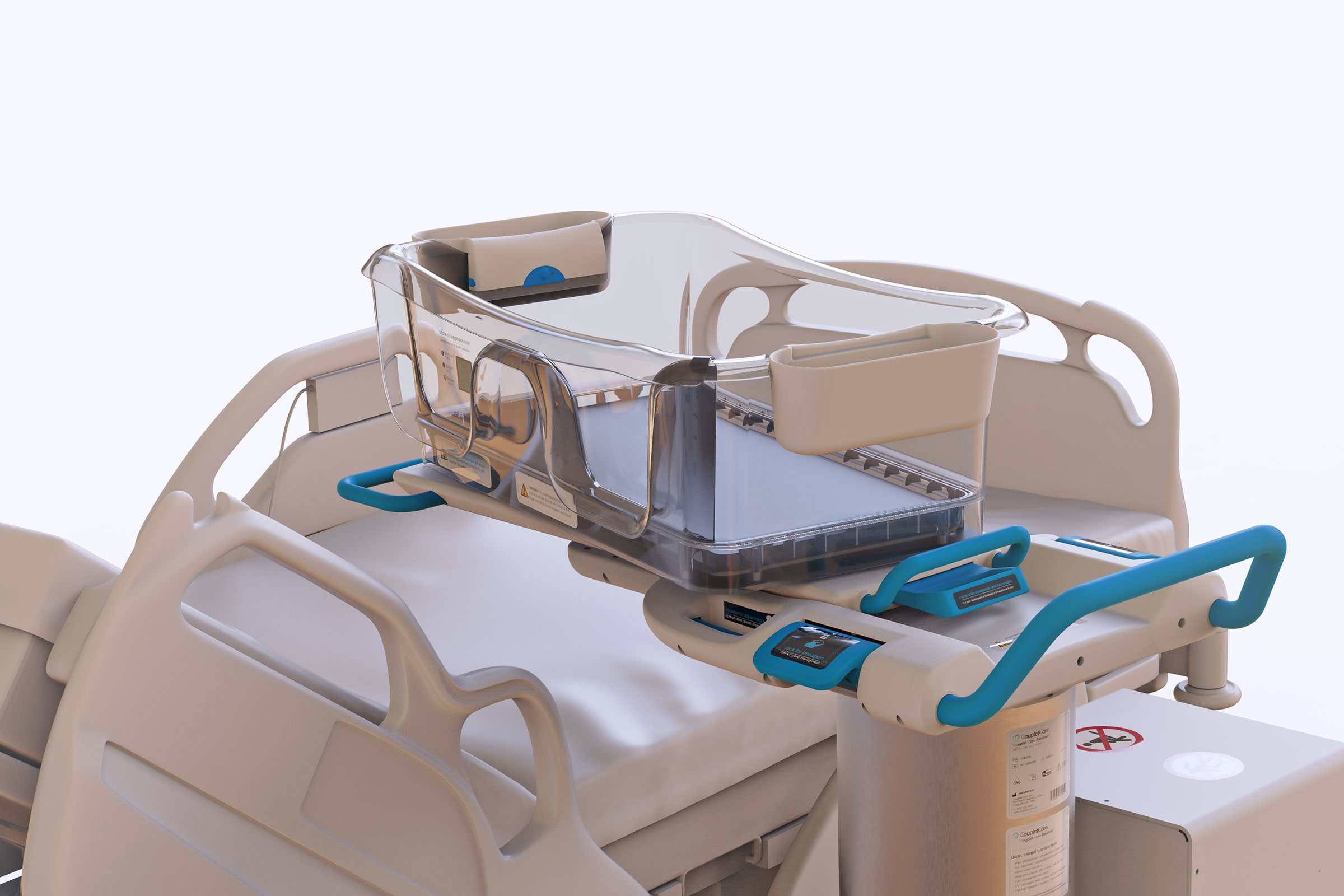
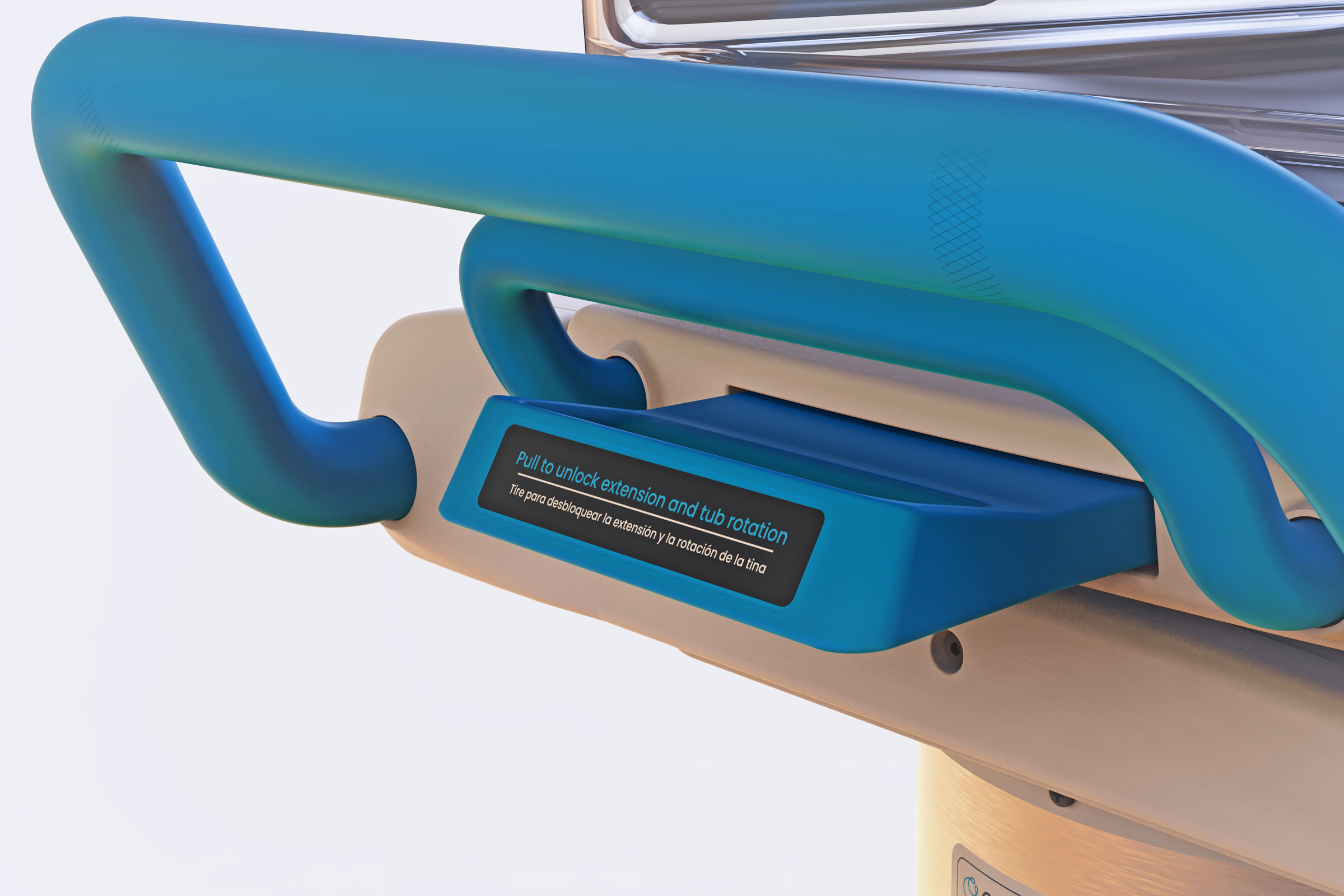
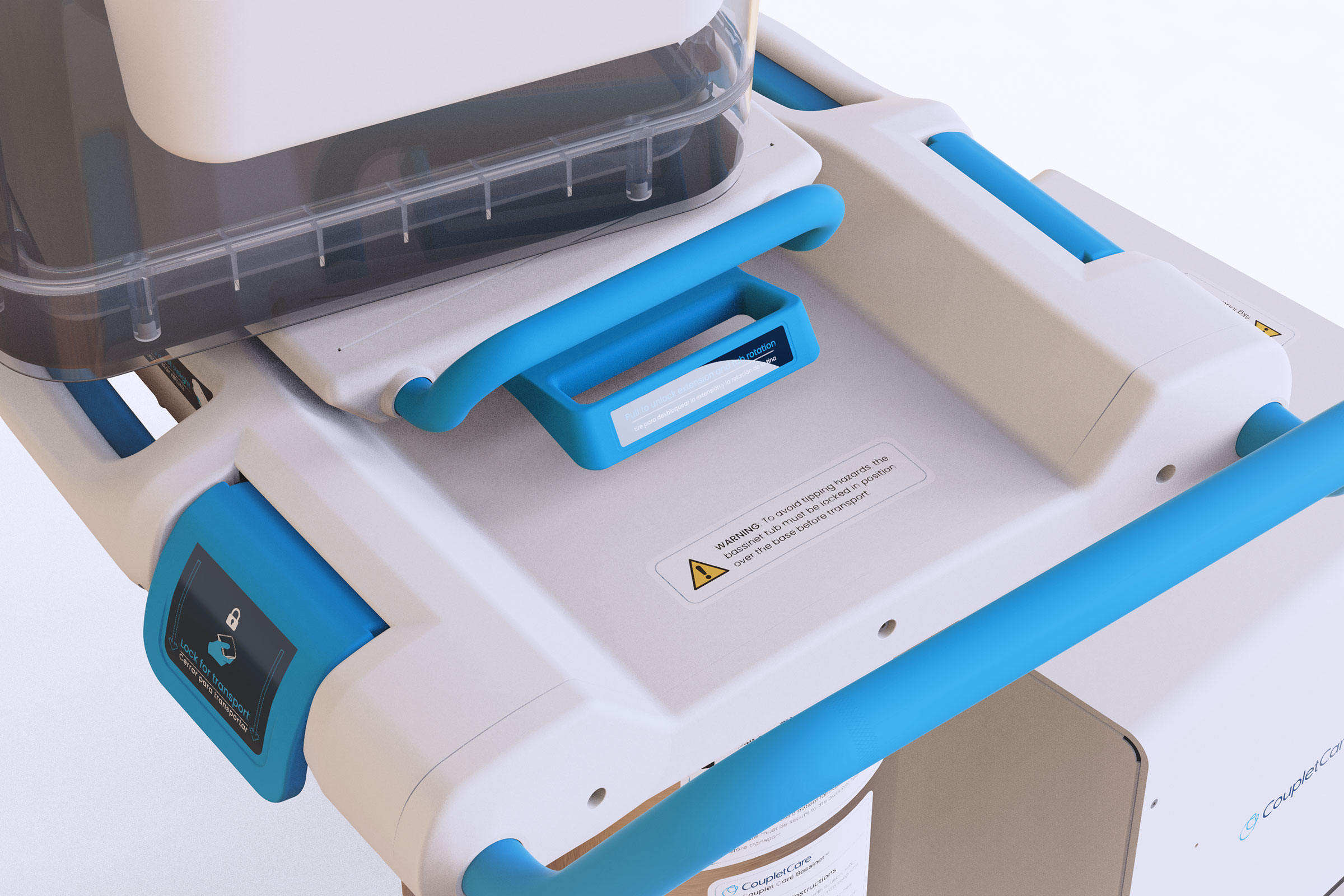

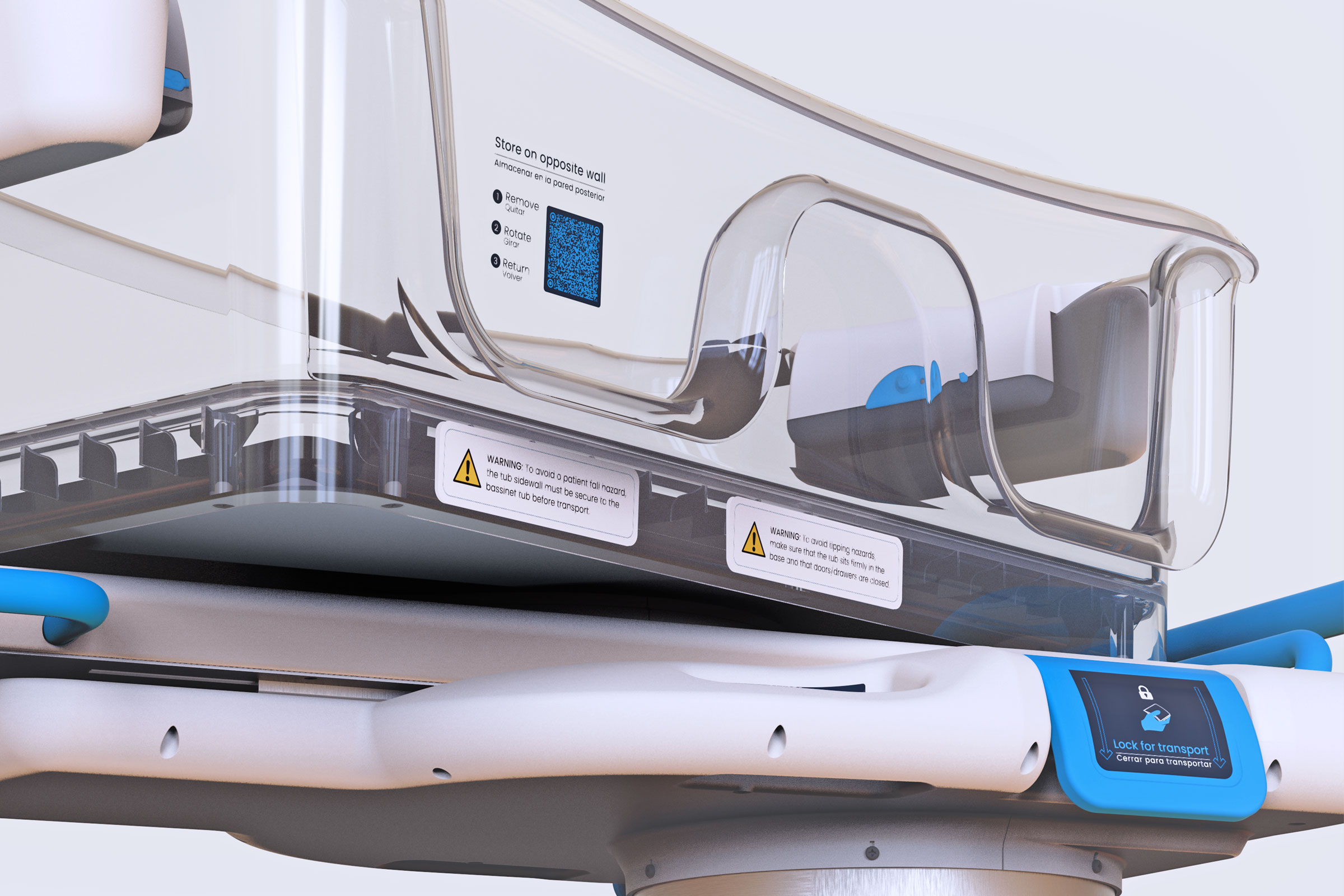
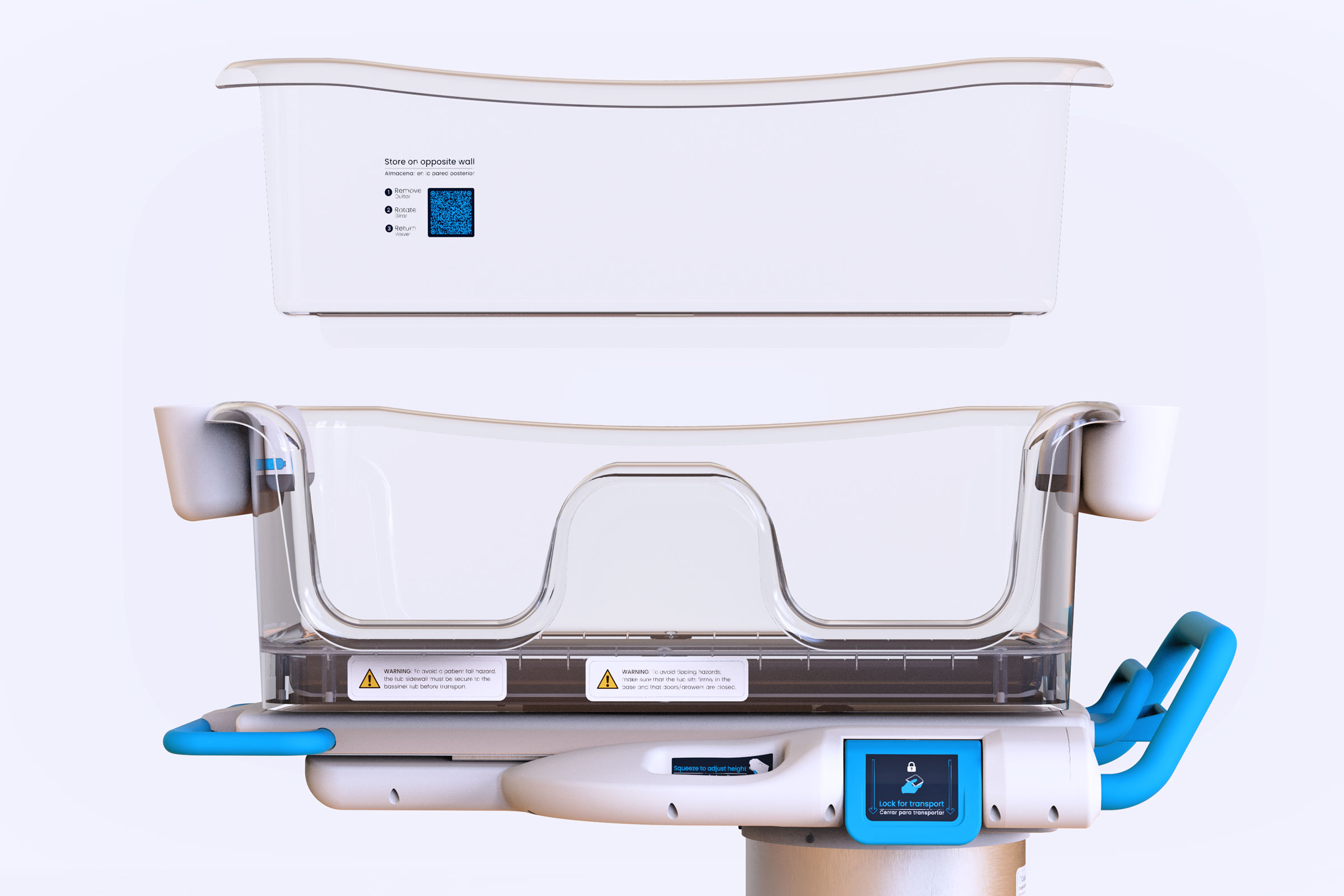
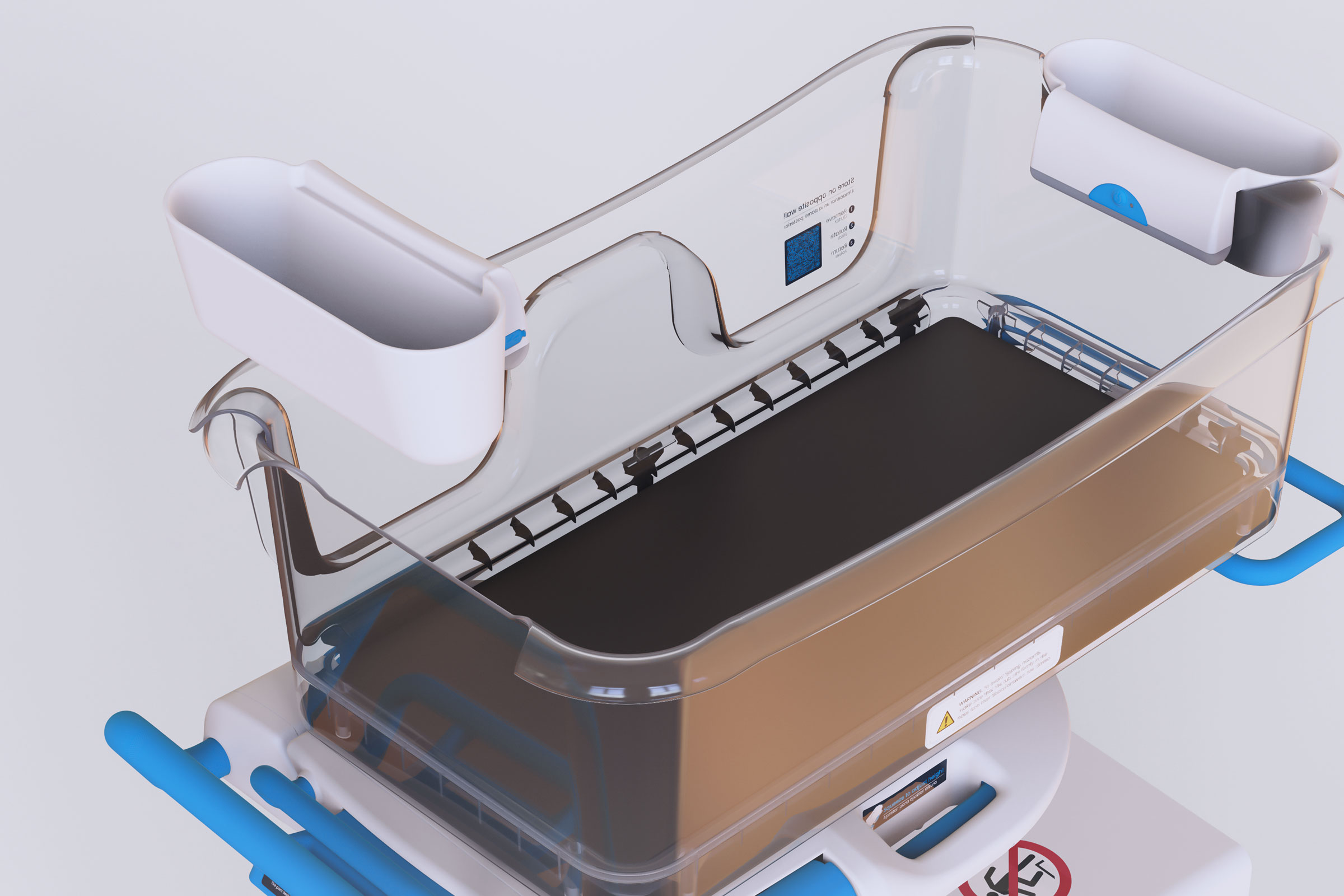

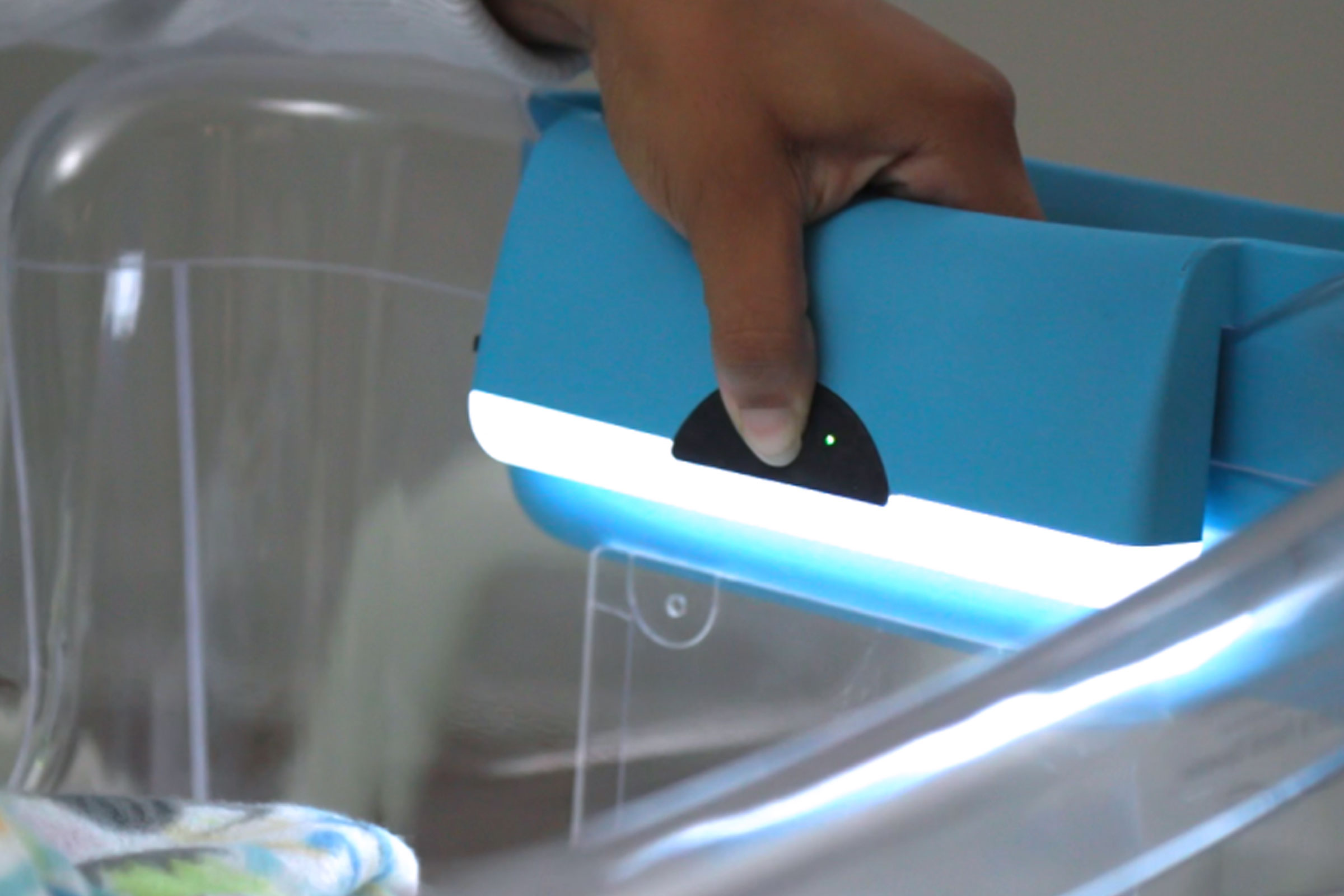
The final design introduces the Couplet Care Bassinet, a patented system that redefines how mothers and infants can be close and safely interact together in the critical days after birth. By allowing mothers, including those recovering from C-sections, to reach their newborns without assistance, the bassinet enables mothers to see, reach, and care for their infants and themselves when it matters most. For nurses, the design reduces strain and repetitive calls, creating safer and more efficient workflows. For hospitals, the bassinet aligns seamlessly with Baby-Friendly Hospital Initiative standards by improving rooming-in experiences and supporting breastfeeding.
The design overcame complex challenges while maintaining an aesthetic that communicates both safety and compassion. The result is a product that feels intuitive to families, supportive to clinicians, and transformative for hospital experiences.



With support from Trig’s design expertise and funding from the National Institute of Health and other organizations, the Couplet Care Bassinet is now available for sale. We are excited to offer the device to meaningfully advance postpartum care
The Couplet Care Bassinet has been recognized with four international design awards, including honors from Red Dot, Core77, IDSA, and Good Design. These accolades validated the innovation on a global stage and affirmed the role of industrial design in transforming maternal care.
Beyond the recognition, the true measure of success is in the hospital environment. The bassinet is giving mothers greater independence after childbirth, easing the workload of nurses while improving safety, and advancing a new Couplet System of Care that reimagines the postpartum experience. What began as an insight in patient research has become both an award-winning design and a trusted part of clinical practice.
Trig partnered with Couplet Care to design the over-bed hospital bassinet, enabling mothers to independently access their infants after childbirth. The resulting product has won four international design awards and is now being purchased and integrated into U.S. hospitals.
Traditional hospital bassinets have rigid side walls that are too high which prevent mothers from safely reaching their newborns. This creates dependency on nurses for basic maternal-newborn interactions—feeding, comforting, bonding—at a time when mothers need autonomy and to be able to recover.
The University of North Carolina at Chapel Hill and UNC spin-out Couplet Care, Inc engaged Trig to co-design a bassinet that centered on empathy: keeping mother and infant together, reducing nurse burden, and meeting strict hospital safety standards.
The design journey began with the insight of medical anthropologist Kristin Tully, Ph.D., who had spent years studying the lived experience of mothers and infants in postpartum care. Her research revealed a simple but powerful truth: new mothers need an accommodating-built environment, just as much as they need other components of quality care.
To address the gap for safe connection within postnatal unit rooms, UNC researchers and Trig partnered with master’s design students at NC State University to immerse ourselves in the hospital environment. We observed postpartum routines, interviewed nurses, and mapped patient journeys. These early investigations became the foundation for concept sketches and ergonomic mock-ups that tested reach, comfort, and visibility in real-world scenarios.
Through three full prototyping cycles, the bassinet evolved from idea to refined product. Each iteration advanced key elements of the design, including an adjustable height that aligns with today’s low hospital beds, a rotating over-bed configuration that allows mothers to reach their infants safely, and a transparent tub that protects while keeping the newborn visible.
At every stage, Couplet Care was a hands-on partner, helping to integrate clinical feedback and ensure manufacturability while centering user needs. The result was a design that is both empathetic and practical, demonstrating how industrial design can transform interactions as intimate and critical as the first days of life together.
The final design introduces the Couplet Care Bassinet, a patented system that redefines how mothers and infants can be close and safely interact together in the critical days after birth. By allowing mothers, including those recovering from C-sections, to reach their newborns without assistance, the bassinet enables mothers to see, reach, and care for their infants and themselves when it matters most. For nurses, the design reduces strain and repetitive calls, creating safer and more efficient workflows. For hospitals, the bassinet aligns seamlessly with Baby-Friendly Hospital Initiative standards by improving rooming-in experiences and supporting breastfeeding.
The design overcame complex challenges while maintaining an aesthetic that communicates both safety and compassion. The result is a product that feels intuitive to families, supportive to clinicians, and transformative for hospital experiences.
With support from Trig’s design expertise and funding from the National Institute of Health and other organizations, the Couplet Care Bassinet is now available for sale. We are excited to offer the device to meaningfully advance postpartum care
The Couplet Care Bassinet has been recognized with four international design awards, including honors from Red Dot, Core77, IDSA, and Good Design. These accolades validated the innovation on a global stage and affirmed the role of industrial design in transforming maternal care.
Beyond the recognition, the true measure of success is in the hospital environment. The bassinet is giving mothers greater independence after childbirth, easing the workload of nurses while improving safety, and advancing a new Couplet System of Care that reimagines the postpartum experience. What began as an insight in patient research has become both an award-winning design and a trusted part of clinical practice.


